
What is a Masticating Juicer? How It Works and Why Choose One
A masticating juicer uses a slow-turning auger to crush and press fruit and vegetables to extract juice. They are sometimes known as slow or cold press juicers. Explore its benefits and how it compares with centrifugal juicers.
Making juice at home gives you the freedom to explore flavours and choose your own ingredients. But with several types of juicer available, how do you find one that suits your ingredients, budget and daily routine?
What makes masticating juicers stand out from the rest? A masticating juicer is often favoured by health-conscious consumers and experts for its ability to maximise nutrient retention and juice yield. They are also known to perform better at effectively handling heavily fibrous materials and leafy greens, producing a thicker, smoother juice. Not only this, but the slow speeds of the masticating juicer help to reduce waste and improve the shelf life of the juice, compared to other kinds of juicers.
What Does a Masticating Juicer Mean? And How Do They Work?
The word “masticating” means chewing, which describes how these juicers break down ingredients.
What a masticating juicer is and how it typically works is through a rotating screw called an auger. As you feed ingredients into the machine, the auger crushes them and presses them against a fine filter. The extracted juice flows into one container, while the remaining pulp exits through a separate outlet.
This squeezing action differs from a centrifugal juicer, which uses a fast-spinning grating disc and basket to extract juice.
What Are the Benefits of a Masticating Juicer?
Get More Juice From Your Ingredients
Wanting more from your favourite ingredients? Choosing a masticating model over other juicer types can ensure the most effective extraction of juice and nutrients from ingredients. Masticating juicers can extract a high proportion of juice from produce, often leaving relatively dry pulp. As well as helping you make more from the ingredients that you buy, this process of separating the pulp has advantages in itself. You can make a range of nutritious recipes that use up leftover pulp and turn it into treats that are packed with goodness. You can find these healthy ideas here: The Best Ways to Use Up Pulp After Juicing | Juicers.co.uk
Make the Most of Leafy Greens
Wanting more flexibility and diversity with your ingredients? Masticating juicers are particularly useful if kale, spinach and other leafy greens often feature in your recipes, as they are exceptionally effective in extracting liquid. Its crushing and pressing action is well suited to leafy ingredients, giving you more flexibility to experiment with green juices alongside your favourite fruit and vegetable combinations.
Explore More Than Juice
Some masticating juicers can also prepare sorbets, ice creams, nut milks and nut butters, giving you more ways to use the machine.
Enjoy a Quieter Juicing Routine
Wanting a calmer and quieter morning routine? Preparing your morning juice doesn’t have to be a noisy and stressful start to the day. Masticating juicers generally operate more quietly than centrifugal models. If you like making juice early in the morning, this can make preparation a more enjoyable part of your routine.
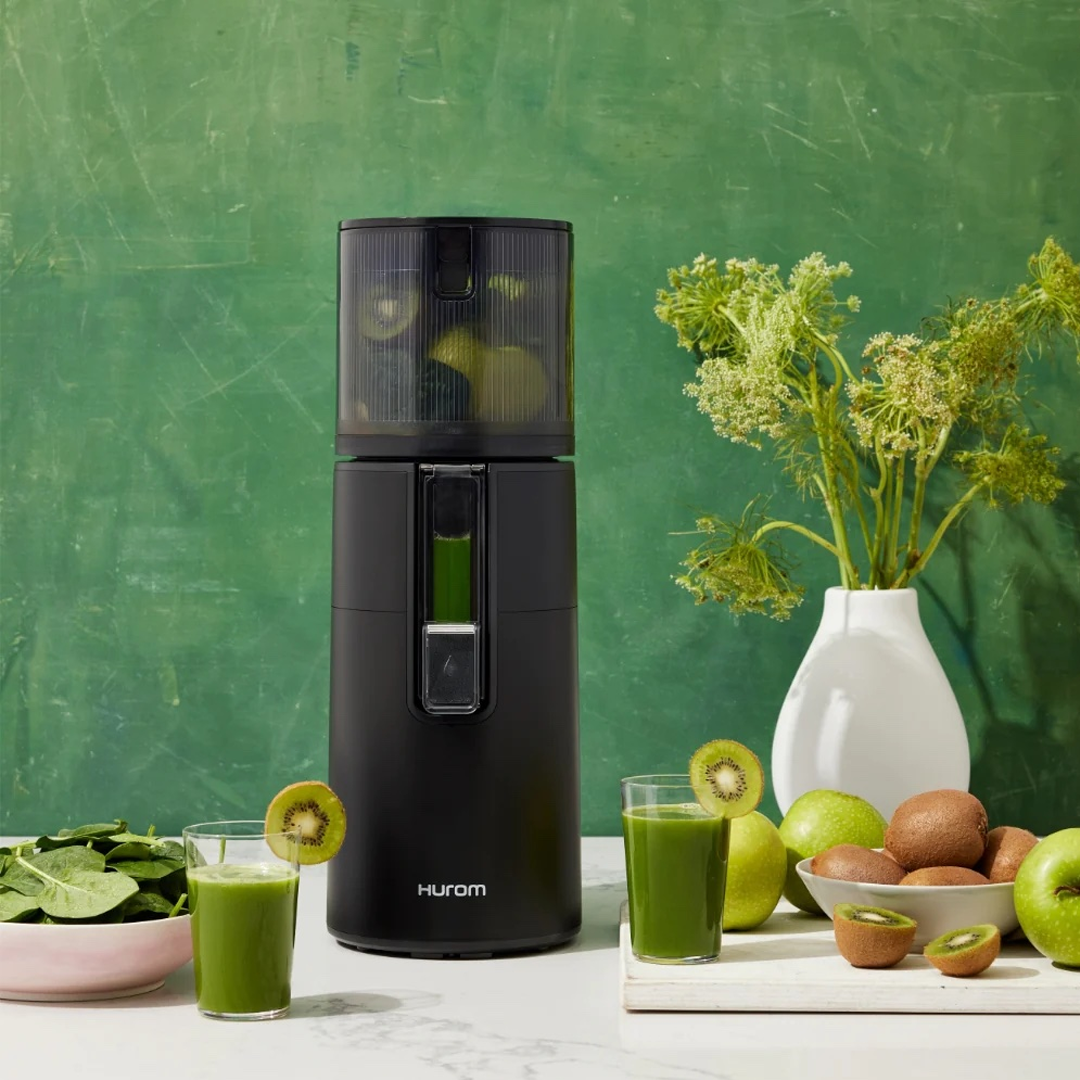
Looking for a masticating juicer that fits easily into your morning routine? The Hurom H400 Self-Feeding Slow Juicer in Black is a great option if you are looking for all the benefits listed above. Its self-feeding hopper reduces the need to feed ingredients individually, making everyday juicing more convenient.
Centrifugal or Masticating Juices: What Other Juicers Are Available, Which Should You Choose and Why Does it Matter?
When choosing a juicer, the choice comes down to what matters most in your kitchen. If time or money is more important than the quality of the juice, a centrifugal model could be a better option for you. Centrifugal juicers work differently from masticating juicers; they instead function at very high speeds, making the juicing process faster, which is useful if you are someone with a busy routine. Equally, they are generally a more affordable option than masticating juicers, making them a more budget-friendly juicing option.
Both types have advantages. The right choice depends on what you want to juice and how you prefer to use your kitchen.
|
Feature |
Masticating juicer |
Centrifugal juicer |
|
Extraction method |
Slowly crushes and presses produce |
Uses a fast-spinning grating disc and basket |
|
Juicing speed |
Typically slower |
Typically faster |
|
Leafy greens |
Generally well suited |
Often less effective |
|
Noise |
Generally quieter |
Generally louder |
|
Price |
Often higher |
Often more affordable |
|
Extra functions |
Some models make nut milks, sorbets or nut butters |
Usually focused on juicing |
A centrifugal juicer may suit you if speed and a lower purchase price are your priorities, particularly if you mainly juice firm fruit and vegetables. To explore centrifugal juicers, click here.
A masticating juicer may be a better fit if you regularly juice leafy greens, value efficient extraction or prefer a quieter machine. To browse masticating juicers, click here.
Is a Masticating Juicer Right for You?
A masticating juicer can be a useful addition to your kitchen if you enjoy experimenting with ingredients and want a machine that handles leafy greens well.
Before buying, consider what you’ll juice most often, how much space and time you have, and your budget. The best juicer is one that makes homemade juice an enjoyable part of your routine.
Related Reading -
- The Best Beginner Green Juice Recipe | Juicers.co.uk
- Coriander Green Juice | Juicers.co.uk
- Circulatory Wellness Juice Recipe | Juicers.co.uk
- 10 Things To Consider Before Buying A Juicer
- Hurom H400 Vs Nutribullet | Juicers.co.uk
- Quietest Juicers for Home Use (No More Morning Noise)
- What Is the Difference Between a Masticating Juicer and a Cold Press Juicer?